Read the story: The lines an abbot incised by hand beneath a statue ›
Notes on the object
Posture
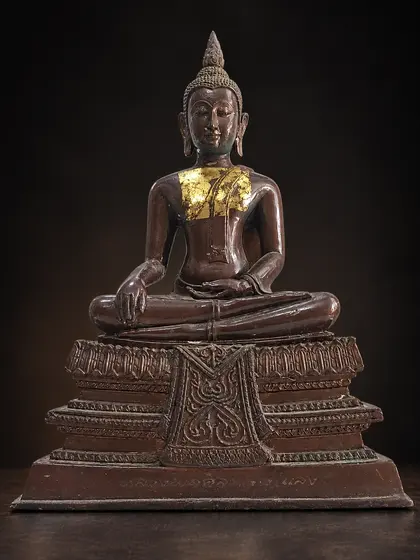
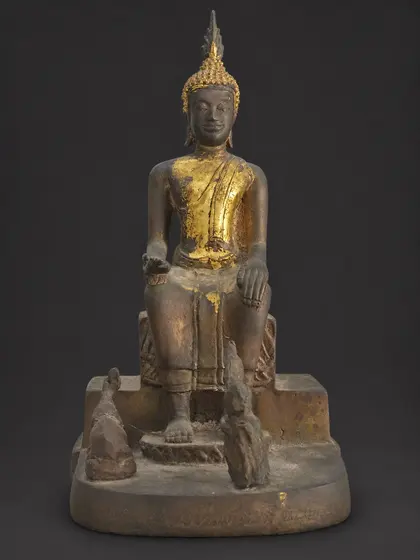
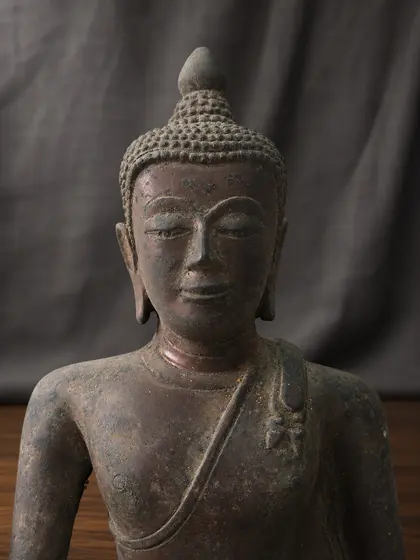
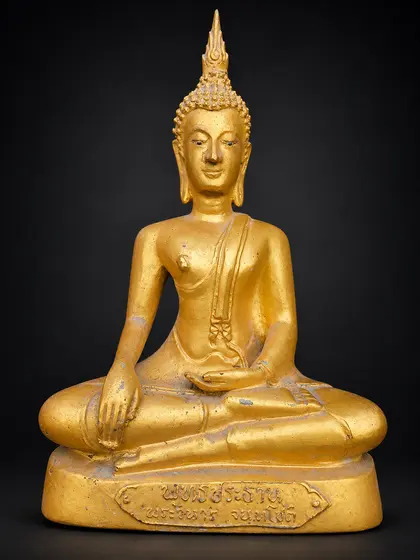
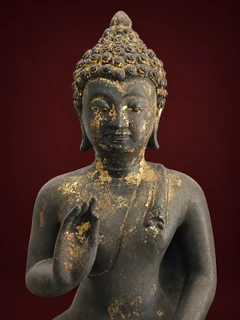
The Buddha sits in full lotus on a lotus throne. The right hand is raised to the chest, thumb and index finger touching to form a circle – the gesture of teaching (Vitarka), symbol of the Wheel of the Dharma, of wisdom, and of a teaching that brings peace and dispels fear. The left hand rests palm up in the lap in meditation, holding stillness within. The hair curls are large and round, the ushnisha shaped like a lotus bud, and the full face carries the faintest smile – features close to the northern Chiang Saen style, much favoured by the foundries of old central Thailand.
Patina
The ground is a deep black bronze; on the face, neck, chest and hands, patches of gold leaf remain – traces of the many times the faithful applied gold as an offering. This "black flecked with gold" surface forms only over decades of genuine veneration and cannot be imitated in a few months.
Black bronze: in the time of the old masters, bronze for casting was usually gathered from old temple bells and objects offered by the faithful, then melted down and cast – which is why the metal has such depth, weight and character of its own.
Meaning
The teaching gesture is the gesture of wisdom and clarity. Kept at home or in the workplace, the statue is a reminder to keep the mind clear when making decisions, to let one's words carry weight, and to keep harmony in the household. It speaks especially to teachers, managers and those in business for whom trust is everything.