Private collection gallery in Hanoi · visits by appointmentZalo +84 936 332 163Phone +84 961 911 111

Other Figures · TQTC-TP006

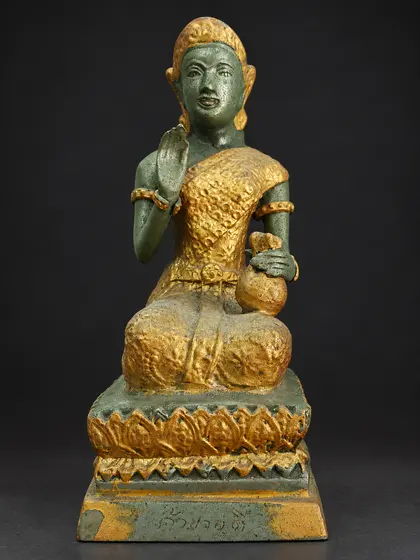
Kneeling Mae Nang Kwak – Khom Script Around the Base, 1970

Travel anywhere in Thailand, from a small market stall to a large shop, and almost every place of trade keeps a small figure of Mae Nang Kwak – a kneeling woman with one hand raised, beckoning. Vietnamese call her Mẹ Ngoắc, "the Beckoning Mother". Thai folk tradition tells that Nang Kwak was the daughter of a merchant family; thanks to her sincerity and the blessings of holy monks, wherever she went trade flourished. Since then, people in business have honoured her to "call in" customers and good fortune.

This statue dates from around 1970 and belongs to the older generation of Nang Kwak images, quite different from the mass-produced figures of today. She kneels on a square base, wearing a pointed Thai crown, her face kindly. Her right hand is raised to the shoulder, palm slightly cupped, beckoning inwards – calling in customers, benefactors and good luck. Her left hand rests by her thigh, firmly holding a money bag – a symbol of keeping wealth, saving, and prosperous trade.

Object record

Object no.
TQTC-TP006
Date
Around 1970 (BE 2513)
Material
Antique bronze, natural brown patina
Status
In our care – open for custodianship

This statue is open for custodianship. Message us on Zalo with object number TQTC-TP006 for further photographs, video and a personal conversation.

Contact on Zalo +84 936 332 163

What is custodianship?

Read the story: Mae Nang Kwak and the Khom verse around her base ›

Notes on the object

Most valuable of all is the script: around the base run raised lines of Khom – the ancient Khmer script that Thai masters use to write sacred verses, rather than ordinary Thai. It is Nang Kwak's verse for drawing in prosperity. The back is covered with a lattice pattern like a yantra, and the shoulders and garment are finely carved. The antique bronze has turned brown, touched with the green of time – the sign of more than half a century.

Antique bronze: statues of this era were usually cast from metal gathered from old bells and offerings, melted again – so the colour is deep, the piece heavy in the hand, growing more beautiful with age.

Meaning

She is traditionally placed at the cash counter, on a desk, or in a place of honour facing the main door.
Zalo