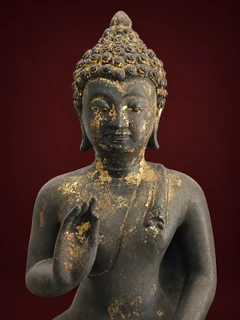
Understanding Buddha images
Common hand gestures (mudras) on Thai Buddha images
Subduing Mara, Teaching, Meditation and the Pa Lelai posture – how to recognise each gesture on a Thai Buddha image, and what it means.
When you look at a Thai Buddha image, the first thing to notice is the hands. The Thai call each posture a "pang" (ปาง). Each pang is tied to a moment in the life of the Buddha, and so each carries its own meaning.
Subduing Mara (Maravijaya) – the most common
The Buddha sits in full lotus, the right hand resting over the knee with the fingertips touching the earth, the left hand palm up in the lap. This is the moment beneath the Bodhi tree when Mara came with his armies to disturb him: the Buddha touched the earth to call the Earth Goddess as witness to his merit, and attained enlightenment.
Most principal Buddha images in the ordination halls of Thai temples take this gesture. Those who keep such an image usually seek steadiness in the face of difficulty and peace for the home.
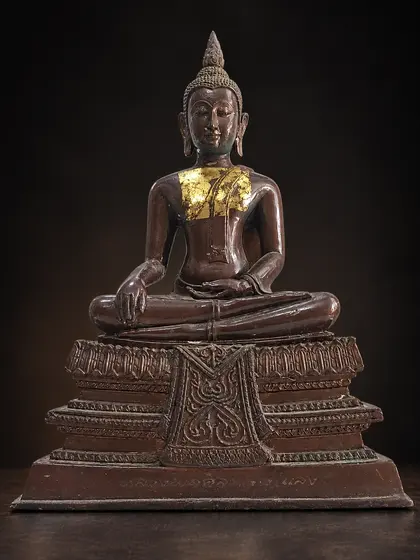
Meditation (Samadhi)
Both hands rest one upon the other in the lap, palms up. This is the Buddha seated in meditation before his enlightenment. A meditating image evokes stillness, reminding us to keep the mind at peace in a changing world.
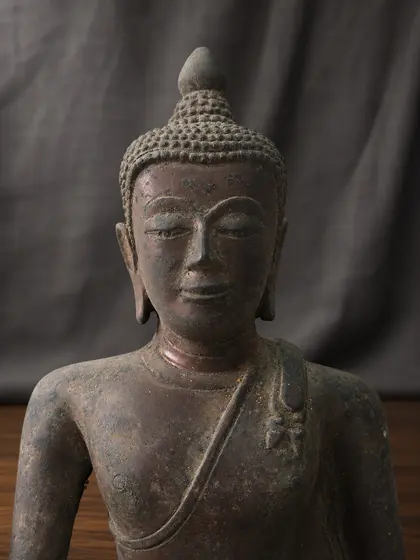
Teaching (Vitarka)
The right hand is raised to the chest, thumb and index finger touching to form a circle – the circle symbolises the Wheel of the Dharma. This is the gesture of the Buddha teaching. Its meaning is linked to wisdom, clarity and words that carry weight.
It should be distinguished from Fearlessness (Abhaya): there the hand is also raised, but the palm faces straight forward and the fingers do not touch – it means granting freedom from fear.
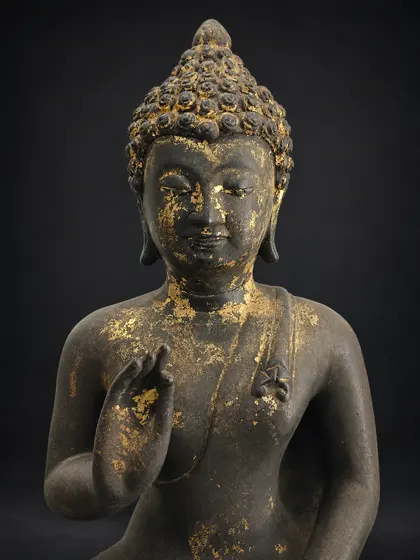
The Pa Lelai posture – seated with legs lowered
Quite different from the postures above: the Buddha sits on a throne with both legs lowered. The story tells that when the Buddha spent the rains retreat alone in the Palelai forest, a great elephant came to attend him, offering water and fruit; a monkey offered a honeycomb. Pa Lelai images therefore often show an elephant and a monkey kneeling at his feet.
The most famous statue in this posture is Luang Pho To at Wat Pa Lelai, Suphanburi – a great image more than 23 metres high.
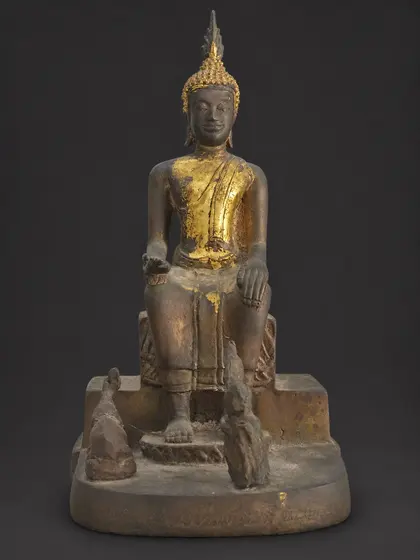
A few tips for looking at a statue
- Look at the hands first, then at the ushnisha (the protuberance on the crown): pointed like a flame usually means the Sukhothai style; rounded like a lotus bud suggests the Chiang Saen style.
- Turn the statue to look beneath the base and at the back: inscriptions with the temple name, the Buddhist Era year, sometimes even the abbot's handwriting – this is the statue's "birth certificate".
- The patina (the Thai call it "phiu") speaks of time: gilding worn away to reveal the bronze beneath, or the green of verdigris, both take many decades to form.